Forum
WARNING:This product contains nicotine. Nicotine is an addictive chemical.
Launch Time: 2017-03-14 Views: 3092 Rely: 0 Started by:

Is vaping bad for you? Depending on what you read, you might think that vaping is as safe as breathing clean air, or that it’s just as bad as smoking cigarettes. Neither of those things is correct, of course. The truth is more nuanced, but it isn’t somewhere in the middle either. When we judge the risks of vaping, we’re typically looking at relative risk. We’re comparing vaping to smoking, which is usually what vapers did before they began using e-cigarettes. There’s not much reason to compare vaping to clean air, since most vapers would be smoking if vaping didn’t exist.
That doesn’t mean we shouldn’t try to learn the specific dangers of vaping though. If there are dangers hidden in e-cigs, most vapers would like to know what they are. Maybe the products could be modified to avoid the potential risks, or maybe smokers could find an even safer source of nicotine like smokeless tobacco. Let’s look at how vaping affects the areas of the body that are damaged by smoking, and examine the evidence about potential disease outcomes.
Smoking cigarettes causes well-known harm to the lungs. Long-term inhalation of burning tobacco can lead to lung and esophageal cancer, and to a variety of deadly lung conditions like emphysema, chronic bronchitis, and chronic obstructive pulmonary disease (COPD). Smoke attacks the lungs in several ways. It contains thousands of chemicals, more than 70 of which are known carcinogens. It also contains particulate matter — fine bits of burned tobacco — that are deposited deep in the lungs, where they can be buried in the tissue. Vaping doesn’t produce known carcinogens in quantities large enough to be considered real risks, and it doesn’t contain solid particles like smoke.
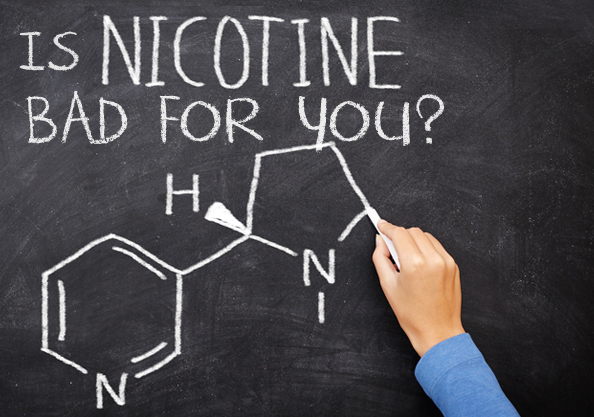
Additionally, inhaled smoke causes structural and operational damage inside the lungs. The toxic combustion material affects the parts of the lungs, like the cilia and bronchioles, and can lead to reduced function. And a smoker’s lungs begin to produce more mucous, which doesn’t clear properly anymore. That’s what causes emphysema and chronic bronchitis. E-cigarette vapor isn’t smoke. There is no current evidence that inhaling a mixture of propylene glycol and vegetable glycerine causes any kind of long-term damage.
However, there may be risks in inhaling some flavorings. There are flavoring agents found in some e-liquid that have been linked to a condition known as bronchiolitis obliterans, or popcorn lung. These chemicals — diacetyl and acetyl propionyl — are probably responsible for cases of popcorn lung at some flavoring factories, where workers inhaled large quantities of the substances in powdered form. While popcorn lung is a frightening condition, there has never been a diagnosed case in a vaper. Further, cigarette smoke contains much more of these chemicals that e-cig vapor, yet there have been no known cases of smokers contracting bronchiolitis obliterans either.
The potential of nicotine to affect cognitive development in the teenage brain is trumpeted by anti-vaping activists. But the truth is that the danger is based on rodent studies and may not translate perfectly — or at all — to human brains.
We don’t recommend that teenagers vape — not least of which because it’s illegal. But, as in all situations, it borders on criminal to tell anyone that vaping is no better than smoking. Teenagers, like adults, deserve honest information about the choices they make. Denying that information is no better than telling them that using condoms doesn’t massively reduce the chances of pregnancy and sexually transmitted diseases from sex.