Forum
WARNING:This product contains nicotine. Nicotine is an addictive chemical.
Launch Time: 2016-11-08 Views: 2042 Rely: 0 Started by:
During the ongoing presidential race, the 9 million vapers around the US have been posing questions in the hope to get some answers about the candidates’ viewpoints about vaping, and how their presidency would influence the current federal regulations… to no avail. However, while Trump and Clinton have chosen to ignore such a sizeable chunk of voters, Governor Gary Johnson’s National Director Jim Wallace replied clearly stating the candidates’ position on the topic.
The official statement
“In the first debate, voters listened to two candidates dance around the American economy. What you’ll never hear from those candidates is how the economy is being killed by excessive regulation. Adding,“The vaping industry currently counts nine million customers, producing about 4 billion$ a year in annual sales. With the excessive regulations recently introduced by the FDA, as many as 12,000 vaping businesses will be out of business”, and presidential candidate Governor Gary Johnson himself said, “the free market and entrepreneurial spirit should be encouraged. Nowhere is this more obvious than the vaping industry.”
Hitting the nail on the head, the party took a brave step by admitting that the regulations put in place by the FDA could have detrimental effects on a much larger scale than most are aware of. Both former governors, Gary Johnson and the candidate for his vice president Bill Weld, understand the importance of small businesses in a large economy, and the negative crippling impact that over regulating creates.
This is not an endorsement of any candidate, or a smear campaign of a political ideology. This is the culmination of research for the education and entertainment of our readership.
Donald Trump (Republican)
02a39b38.jpg?w=736&h=452)
Trump has not made direct statements about vaping and electronic cigarettes, but has been vocally opposed to the FDA. In a document released last September, Mr. Trump called for abolition of business-killing FDA regulations: “The FDA Food Police, which dictate how the federal government expects farmers to produce fruits and vegetables and even dictates the nutritional content of dog food. The rules govern the soil farmers use, farm and food production hygiene, food packaging, food temperatures, and even what animals may roam which fields and when it also greatly increased inspections of food “facilities,” and levies new taxes to pay for this inspection overkill.”
V2 produced a 600-vaper poll, which revealed Donald Trump to be the most pro-vaping candidate. Though Trump’s political leanings are all over the place, it’s hard to determine what his concrete proposed policies are, but his emphasis on small-government and his proposed abolition of FDA regulations make him a good candidate on the singular issue of vaping. It is important to note that Donald Trump has never smoked cigarettes, and any any ties he has to Big Tobacco are unclear.
Mike Pence (Republican)
d8ff5006.jpg?w=520&h=390)
Mike Pence has an eyebrow-raising history with Big Tobacco. While Mr. Pence worked in the House of Representatives from 2001 to 2013, he accepted more than $100,000 in campaign contributions from Big Tobacco. Among his donors: R.J. Reynolds (Newport, Camel, Pall Mall), Philip Morris (Marlboro) , Brown & Williamson, and US Tobacco.
Mike Pence made the following statement on tobacco: “Time for a reality check. Despite the hysteria from the political class and the media, smoking doesn’t kill. In fact, two out of every three smokers does not die from a smoking related illness and nine out of ten smokers do not contract lung cancer. This is not to say that smoking is good for you…. News flash: smoking is not good for you. If you are reading this article through the blue haze of cigarette smoke, you should quit. The relevant question is, what is more harmful to the nation, second hand smoke or back-handed big government disguised in do-gooder healthcare rhetoric?”
Pence is an ardent small-government conservative, who sees every regulation as a “slippery slope” into a nanny-state of market-killing regulation. Notably, Mike Pence was vocally against the FDA’s deeming regulations.
Hillary Clinton (Democrat)

Hillary Clinton is a regulation-friendly candidate. She advocates tighter regulations on Wall Street, strongly supports the Affordable Care Act, and even introduced the Family Entertainment Protection Act, which aims to keep violent video games away from children. She has stated intend to “fully fund the FDA’s Office of Generic Drugs to clear out their multi-year generic drug approval backlog,” which is hardly an anti-FDA stance. Compared to Trump and Pence, Hillary Clinton is the Big Government candidate, which may be bad for vaping.
On the other hand, Clinton proposed to reduce unnecessary occupational licensing requirements to ease burdens on small business owners. She has a good track record for reducing time and costs associated with licensing, which may be a good sign for her attitude towards the PMTAs. Since most vape companies are small businesses, her policies could benefit the vaping community.
Mrs. Clinton also claims she would “increase funding for scientific research at agencies like the National Institutes of Health and the National Science Foundation. Mrs. Clinton proposes a NIH budget increase from $600 million per year to $2 billion a year, which may bring some vital science to the FDA debate. An optimist would say this science research could provide some great pro-vaping data, to put anti-vaping propaganda to rest. A cynic would not trust the NIH to be objective, potentially fanning the flames of anti-vaping alarmist. Hillary Clinton is anyone’s guess, when it comes to her feelings on vaping.
Tim Kaine (Democrat)
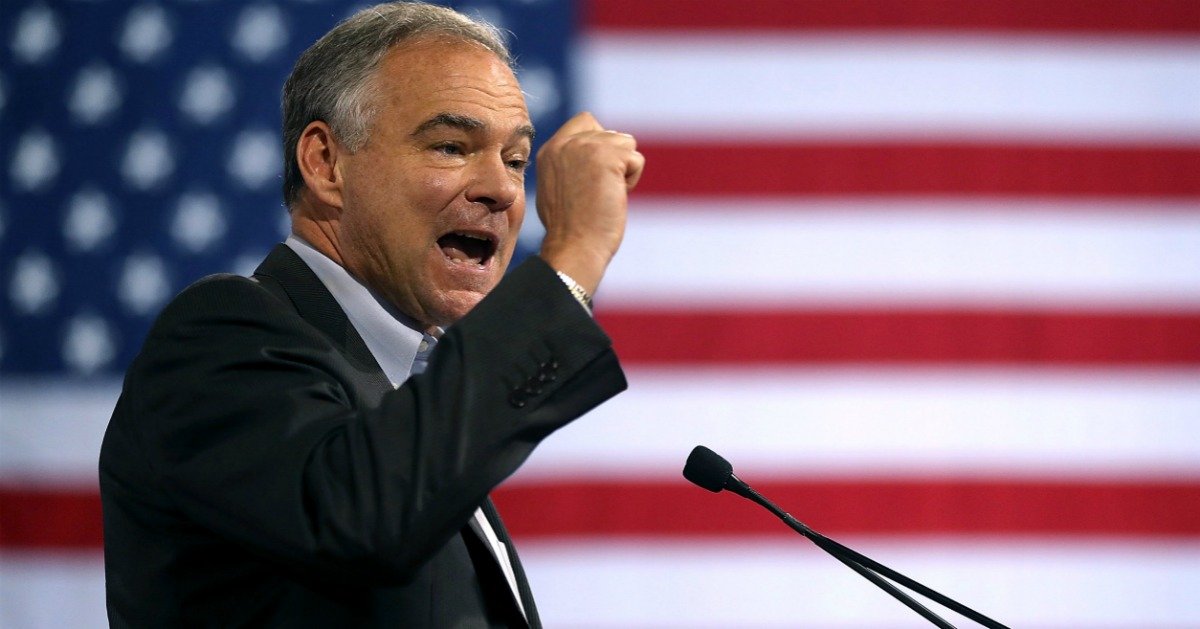
In 2007, Governor Kaine signed an executive order banning smoking in all government buildings and state-owned cars. In 2009, Mr. Kaine banned smoking in restaurants and bars in the state of Virginia. This is indicative of a belief in a strong centralized government, and one that can dictate the behaviors of its citizens.
Many vapers have written to their congressman, and Tim Kaine was included. His stock reply: Thank you for contacting me about potential regulation of “e-cigarettes.” I appreciate hearing from you.
As you know, the U.S. Food and Drug Administration (FDA) Center for Tobacco Products is considering the scientific and public health case for whether to regulate e-cigarettes as part of its authority under the Federal Food, Drug and Cosmetic Act. FDA points to the lack of wide study of e-cigarettes to determine how much nicotine they contain and their safety level compared to regular cigarettes. FDA expects to announce its intentions this year and has more information on its website at Electronic Cigarettes (e-Cigarettes).
While adults may purchase nicotine products if they so choose, FDA has a legal and public health obligation to keep these products out of the hands of young people. I will be sure to keep your views on this issue in mind as this process moves forward.
Thank you again for contacting me.
Sincerely,
Signature
Tim Kaine
The fact that Mr. Kaine used quotation marks around “e-cigarettes” makes me think that Mr. Kaine sees vaping as an alien outsider, hardly worth his attention. Adding to that, his language empowers the FDA. A case could be made for Tim Kaine as the most anti-vaping politician on the ticket.
Gary Johnson (Libertarian)

Gary Johnson is a free market capitalist, who has stated, “Free markets and limited government are the foundation of prosperity.” He is an absolutist when it comes to government restrictions. This is anti-FDA, and pro-unhindered business.
On the nicotine front, Gary Johnson is opposed to special sin taxes on cigarettes. When GQ asked his position on vaping, Mr. Johnson gave the following response: “I have vaped. I have given that a try. Personally, I think there’s something wrong with it… In life, health and wellness, certain things that you eat, I don’t think that you should eat. Sugar, I think, is really not good. Smoking pot, I have an aversion to smoking, but vape also has a–I can’t put my finger on it, but I don’t think it’s healthy.”
Though it seems Mr. Johnson has a personal aversion to vaping, his politics reflect a libertarian attitude. Gary Johnson is a good bet for the vaping community, if he has a chance to get elected.
Jill Stein (Green Party)
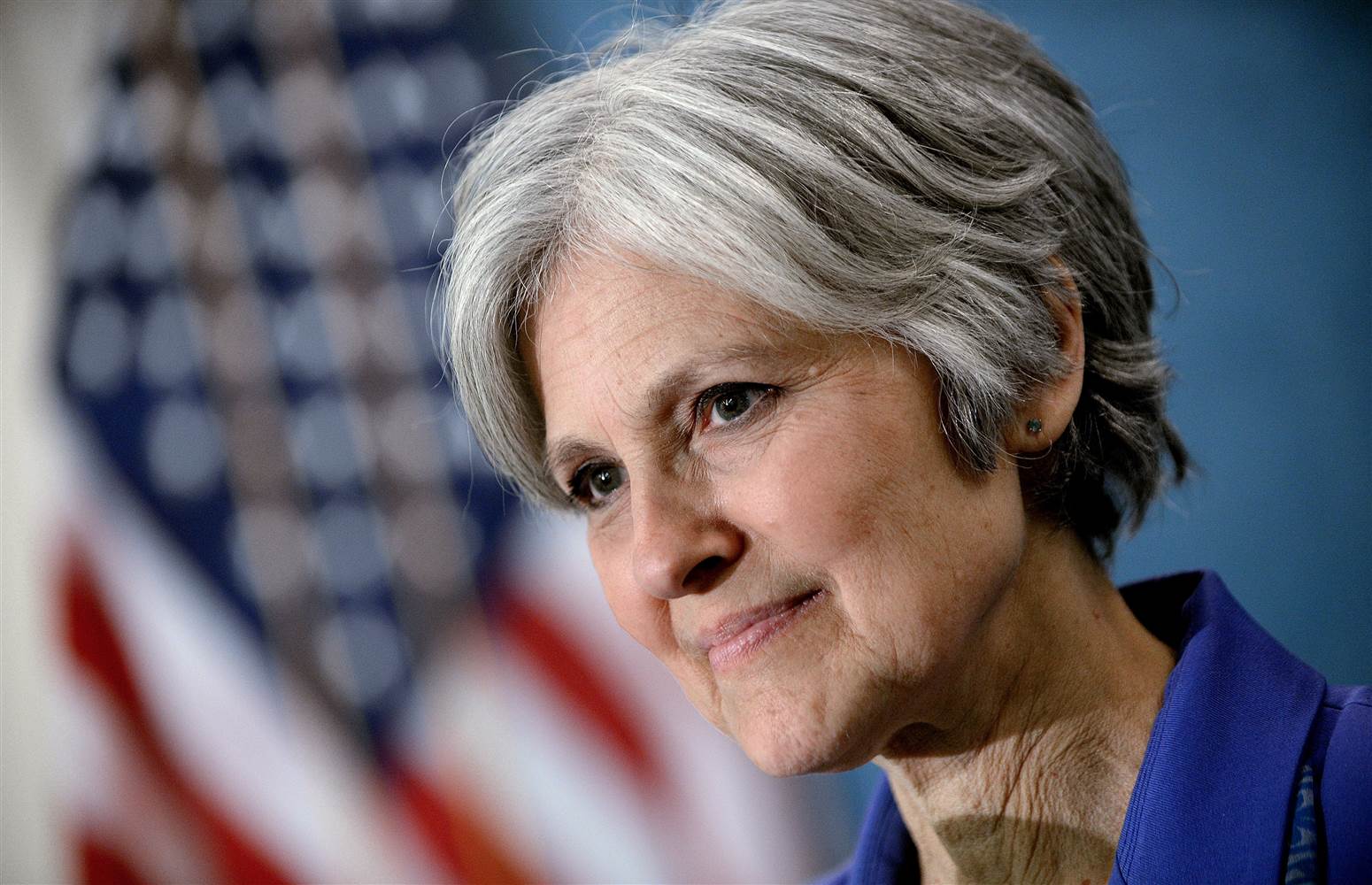
Jill Stein is the Green Party candidate for 2016. Historically, the Green Party has not performed well in the general election. Jill Stein is an outsider, with political stances outside of the mainstream, with an emphasis on science and environmentalism.
Like many of the other candidates, Mrs. Stein has not made any statements on the vaping question. However, on the issue of drugs, she leans heavily on harm reduction over harsh punishment for addicts. If some good science points to vaping as a harm reduction product, she may be a pro-vaping candidate.
On the topic of the FDA, Mrs. Stein has brought forward public doubt toward the FDA and CDC: “Like any medication, they also should be — what shall we say? — approved by a regulatory board that people can trust. And I think right now, that is the problem. That people do not trust a Food and Drug Administration, or even the CDC for that matter, where corporate influence and the pharmaceutical industry has a lot of influence.”
Jill Stein is a bit of a toss-up, in terms of her position on vaping.