Forum
WARNING:This product contains nicotine. Nicotine is an addictive chemical.
Launch Time: 2016-11-05 Views: 1917 Rely: 0 Started by:

Eleaf Ecigs wholesale’s Immeasurable Future
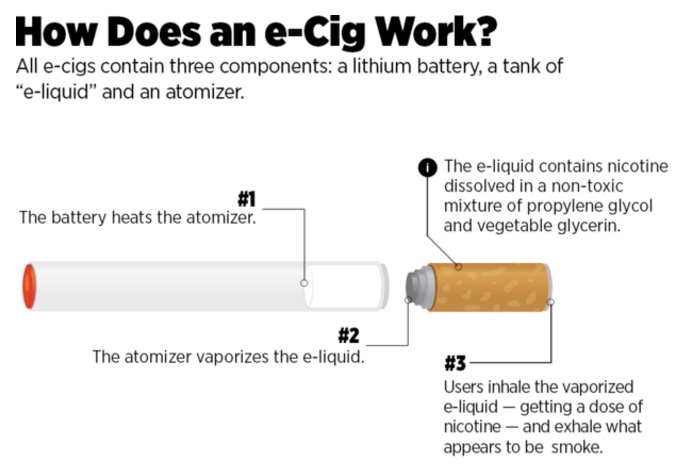
Daniel Walsh was first drawn to electronic cigarettes for the same reason millions of smokers have taken up the devices. "I was a guy who could work 20 hour days and juggle a number of complex projects, but I couldn't quit," says Walsh. "It was my greatest deficit." The quixotic promise that have made e-cigs the subject of endless controversy — that smoking cessation and smoking as recreation can coexist — resonated with Walsh. After successfully making the switch, he was so enamored by the product that he left his job developing artificial intelligence in San Francisco, decamped to Michigan and launched Purebacco, a manufacturer of the flavored, nicotine-laced liquid that are battery-heated into an inhalable vapor inside e-cigs.
With over 30 employees, satellite offices in San Francisco and London, and plans to expand into a 40,000-square-foot headquarters, Purebacco's growth is a microcosm of the industry as a whole, which is estimated to do $3.5 billion in sales this year. "There is so much anecdotal evidence out there supporting the idea that people like me have helped hundreds of thousands of smokers quit," says Walsh, who is known to colleagues as the High Priest of Vaping, a fitting nickname for an enigmatic scientist with a mane of blond dreadlocks who works long hours in his sleek laboratory. "Yet as an e-cig CEO, I'm not really supposed to say that, since current rules prohibit us from marketing our products as anything but another vice."
In August, when British health officials released what was billed as a "landmark review" of electronic cigarettes, Walsh savored a moment of vindication. Describing the devices in headline-grabbing language — "around 95 percent safer than smoking" — the study encouraged e-cigs to be labeled as an effective means of helping smokers curb and kick the deadly habit: a nicotine delivery system with the "potential to make a significant contribution to the endgame for tobacco," as the report boldly stated, that should be embraced as a public health breakthrough rather than shunned as a novel evil undermining the crusade against smoking. "It was what I've been preaching for years!" says Walsh. "Maybe we're seeing a shift where people like me don't sound so fringe and crazy."
In England, perhaps. In America, the dominant message regarding e-cigs is that they are a menace. They have been placed under similar restrictions as tobacco products in the U.S., despite the fact that they contain no tobacco, long understood to be the source of the carcinogens that make smoking the leading cause of preventable death worldwide. Campaigns by anti-smoking groups have successfully fostered the perception that the risks of e-cigs are interchangeable from ordinary cigarettes, and the mainstream media has largely followed in step, with much of the reporting on e-cigs focused on the sensational (exploding devices!) and the apocalyptic (worse than tobacco!).
Eleaf Ecigs wholesale’s Immeasurable Future
What makes this all particularly confounding is that most American public health officials agree with the core claim of the British report: namely, that puffing an e-cig is significantly less harmful than a tobacco cigarette. Maybe not a provocative 95 percent safer — the research remains spotty, open to interpretation, and e-cigs are too new to be the subject of any longitudinal studies — but at the very least free of the most pernicious toxins released when tobacco is burned. So why the reluctance to make this clear, when 480,000 Americans die from smoking each year?
While the e-cig industry was jumpstarted by entrepreneurs like Walsh, big tobacco companies have since waded into the fray — which might be part of the problem. They don't want to be shut out of a growing business that some predict may eventually overtake their own, but given that cigarette sales still generate a staggering $35 billion in annual profits for the world's six largest tobacco companies, they remain incentivized to keep smokers drawn to their bedrock product. With electronic offerings like MarkTen — made by Altria, manufacturers of Marlboro — now among the most visible brands, it's understandable that some view e-cigs as the latest ploy of an industry with a well-documented history of manipulation and subterfuge. Whereas 84 percent of smokers believed e-cigs to be safer than ordinary cigarettes in 2010, by 2013 that figure had dropped to 63 percent. A study last year found that a third of people who had abandoned e-cigs and resumed smoking tobacco did so out of concern for the health effects of vaping.
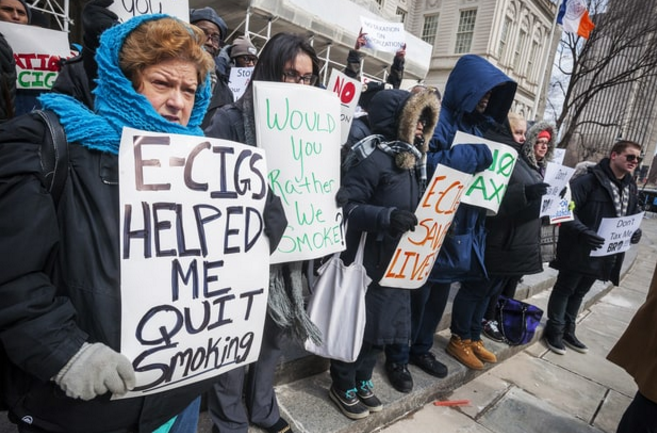
The crux of the British report is that such misconceptions represent a public health failure, one that could be reversed by highlighting the comparative safety of e-cigs for current smokers, while making it clear that nonsmokers should steer clear of vaping. But the biggest hurdle for e-cigs in the U.S. is the very thing that makes them so appealing: by mimicking the hand-to-mouth ritual of smoking and delivering the same drug — nicotine — found in tobacco, they look and feel a whole lot like smoking. As a result, concerns about e-cigs center on whether encouraging people with a deadly habit to switch will rollback a decades-long trend of historically low smoking rates. Are e-cigs used by smokers to augment their habit rather than abstain? Could they prove to be a gateway toward "re-normalizing" tobacco smoking, especially among impressionable teens? Legitimate as such questions are, at this point they may be eclipsing the most pressing one of all: Is the United States, in applying the same tactics used to demonize smoking on a safer substitute, missing out on a chance to save the lives of millions of its citizens?
People smoke for nicotine but they die from tar." Michael Russell, a South African scientist widely considered to be the godfather of tobacco control, wrote those words in 1976. At the time it represented a drastic new way of understanding smoking: as a physiological addiction to a drug rather than a purely psychological habit. But nearly 40 years later, the revelation of Russell's research has been obscured, as the decades long war on smoking became, in effect, a war on nicotine. Rather than occupying a place on the same spectrum that allows caffeine and alcohol to be consumed without stigma, today the word "nicotine" conjures up images of amputated limbs and metastasizing tumors — even though, as Russell made clear, nicotine in itself has never been the deadly culprit in cigarettes.