Forum
WARNING:This product contains nicotine. Nicotine is an addictive chemical.
Launch Time: 2017-02-21 Views: 2489 Rely: 0 Started by:

E-cigarette are a 21st century take on smoking. They use a battery-operated device that looks like a cigarette and turns liquid from a cartridge into an aerosol. But since vaping arrived on the market less than a decade ago and only gained popularity within the last five years, scientists can’t yet study long-term effects. For that to happen, it will take more time.
Everyone is asking the question, “Is vaping bad for you?” It depends on which side of the fence you sit as to whether or not you believe vaping is harmful. Most supporters of e-cigs and vape pens are those who consider them an effective way to quit smoking. For some, it may be effective, but for others it leads to increased usage, mainly because of its convenience and the fact that you don’t have to actually “light up.”
Vaping, the term for using an e-cigarette device, is a tobacco-free process, except in cases when small amounts of tobacco are used in the liquid cartridges for flavoring. There is a lower risk of the adverse health effects, such as lung cancer, associated with traditional smoking — still the leading cause of preventable disease in the U.S.Vaping is still a delivery system for nicotine, the chemical that gives cigarettes their addictive qualities. And while scientists do not believe nicotine causes cancer, it’s associated with raised blood pressure, increased heart rate and birth defects. It’s also associated with problems in brain development for adolescents.
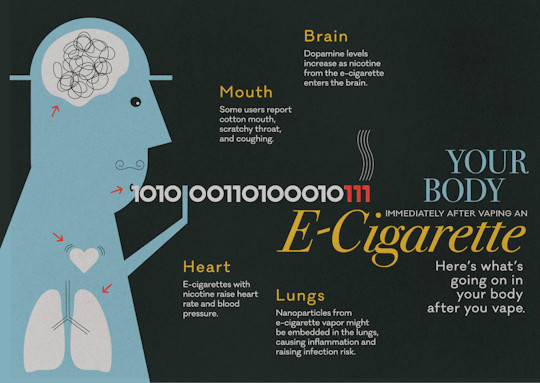
Vaping affects the body in much the same way as cigarette smoking, only to a much lesser degree. Vape pens and e-cigs may or may not contain nicotine, depending on what type is used. One of the most common side effects of vaping is cotton mouth. Cotton mouth is characterized by extremely dry mucus membranes in the mouth. This is caused by the abundance of propylene glycol found in the vapor. Propylene glycol is known for its ability to draw water from its surrounding environment. This means that as the vapor is inhaled and exhaled, it collects water from the mouth drying out tissues and causing irritation. There are many other possible side effects associated with vaping.
Vapor has also caused minor irritation to the lungs and nasal passages as well. Most problems resolve themselves after a few days. Individuals who have nasal irritation can avoid it by not exhaling the vapor through their nose. It’s also difficult to judge the safety of e-cigarettes independent of their context. Some people use them as a replacement for traditional cigarettes, and, for them, the switch is a step in the right direction. E-cigarettes are safer than cigarettes, but that is largely because cigarettes have a long list of health risks associated with them.
E-liquids and the flavors for vaping pens are in the thousands with more and more being created everyday. Many vaping shops make their own unique blends which continues to raise the numbers. Unlike e-cigs that use cartridges that are approved by the FDA and manufactured by the tobacco companies, e-liquids and vaping flavors are mostly unregulated and contain many unknown substances. Most are made with a vegetable glycerin base which does not retain flavor well. Many manufacturers are choosing to use propylene glycol because it is lighter weight than vegetable glycerin and will hold flavor much longer, providing a more satisfying experience.
At this time, it is estimated that over 7,000 vaping flavors exist. Even though the vapors seem to be safe for human use, they still produce toxic chemical reactions that are similar to cigarette smoke. It is important to remember that even though something is safe for a person to eat, it may not be safe for them to inhale. Vaping flavors can unknowingly include allergens that trigger allergic or asthma-like attacks. Because they are not regulated in any way by the FDA or any other health agency, people have no idea what their favorite flavors may contain.