Forum
WARNING:This product contains nicotine. Nicotine is an addictive chemical.
Launch Time: 2016-12-09 Views: 2245 Rely: 0 Started by:
Yesterday, we have talked about the types of leaking and the ways of solving it, the following are the next part of the solutions.
5 – Use the Correct Coils for the E-Liquid To Reduce Leaking
Most tanks come with replaceable coils with varying resistances. These are suited for doing different things. Higher resistance coils (above 1 ohm) very much imitate a cigarette in the way that they are used, and therefore tend to have smaller juice holes. This is ideal for the higher PG (thinner) liquids as they can flow easily. High VG (thicker) liquid used in one of these coils may clog up the coil a lot more quickly. What’s more, higher VG liquid vaporises at a higher temperature. This can cause excess juice problems because the coil can’t vapourise the liquid properly.
Low resistance coils (below 1 ohm) should be used with higher VG (thicker) liquid, as the juice holes and air flow holes are generally a lot bigger to allow for the thicker liquid. If you try to put high PG (thinner) liquids in one of these coils you’re likely to flooding issues. These coil allow too much thinner liquid into the coil, which will end up either in the central tube, or leaking out of the air flow holes.
6 – Check Your O-Rings and Replace Them if Needed
It’s not just over-tightening that can lead to issues with O-rings. They can also degrade or get budged out of position over time, and may just be faulty when you first receive them. To check your O-rings, take your clearomizer or tank apart – this usually just requires unscrewing the various parts – and look for the rubber rings on the atomizer head and at the base of your tank. You should be able to see if any are degraded or out of position. If they are, remove them– and replace them with fresh ones.
Something like a small flat-head screwdriver, a toothpick or a pair of tweezers can help with this.
Some tanks will come with spares, but if not, you’ll have to buy some more in the correct size. It’s also worth checking that your O-ring is installed correctly, so everything fits together with no obvious gaps e-liquid can leak through.
7 – Adding Extra Seals for the Aspire Triton and Nautilus
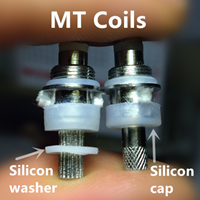
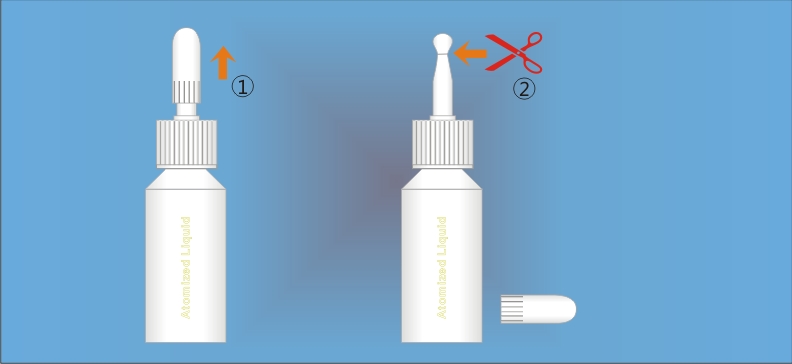
Sometimes, tanks and clearomizers could use more sealing – particularly where the atomizer head meets the centre tube. Many vapers run into this type of problem with the Aspire Triton, with juice leaking out of the bottom after making its way into the centre tube, and it can also affect the Nautilus. For the Triton, you’ll just need one of those little silicone drip tip covers and a pair of scissors. Unscrew the tank and remove the coil from the base. There are two sets of threading on the coil, one at the bottom – which is surrounded by little O-rings on both sides – and one at the top, just above the ridged section.
The upper threading has no seal below (or above) it, which is the source of the issue. Cut yourself a section of your silicone drip tip cover, so you end up with a ring just wide enough to fit between the raised, ridged section and the upper threading, and put it there. You can cut the ring to size more precisely once you’ve got it in place. This makes it less likely to get in the way when you’re trying to re-assemble, but be careful! Once everything is re-attached, you should be able to vape leak-free. The problem on the Nautilus is almost identical (as so is the fix). The only difference is that you can use the lower O-ring from another coil instead of cutting one for yourself.

8 – Increase Your Power Setting
One of the most common causes of leaks is actually flooding. That’s when too much juice gets pulled into your coil for it to vaporise. Tons of excess e-liquid that can leak out of the coil housing.
There are a few ways to solve this…The simplest is to switch to a higher power or voltage setting. This will vaporise more juice per puff, so it can cope with the amount of e-liquid making its way to your coil. It will also lead to more vapour (which you may not want), and can bring out different elements of the flavour of your juice. So it isn’t always ideal.
9 – Add Extra Wicking Material
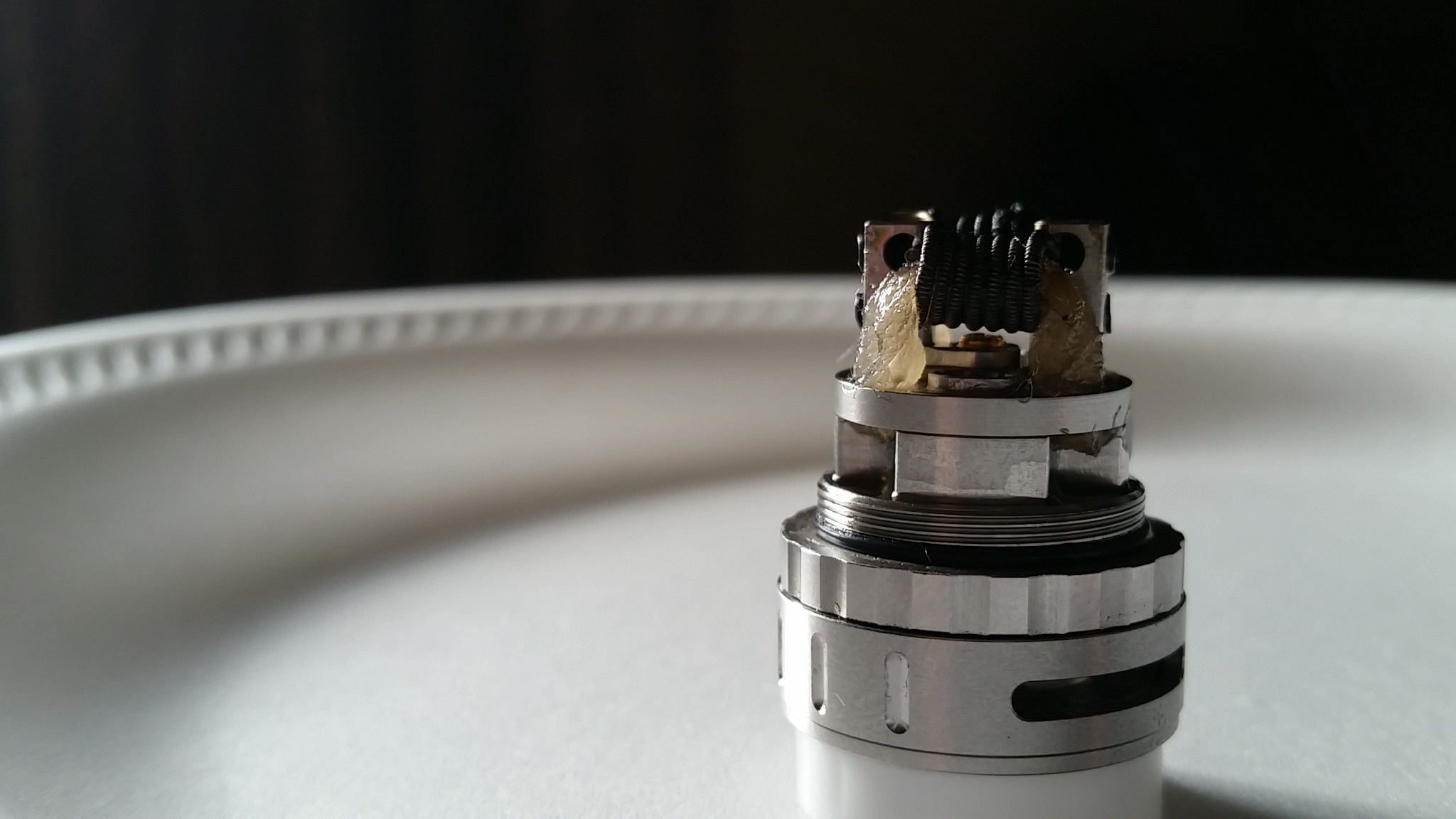
If you are having leaking issues when using an RBA (re-buildable Atomiser), then it is nearly always down to the way that it has been wicked. You need just enough cotton to fill up the space around the coils, but not too much so that the air can get through. There should be just enough cotton to fit through the coil itself, without bunching up on either side when its pulled. If it is too tight, then the liquid won’t be able to get to the coil Please note, this only applies to people building their own coils, we do not advise modifying stock coils.